
How Do You Become a Solicitor in the UK?
Becoming a solicitor in the UK is a goal many ambitious students, graduates, and even career changers aspire to. But it’s not just about obtaining a law degree; it’s a structured journey that requires planning, determination, and a clear understanding of the routes and requirements. This guide will break down the process step by step, covering every angle, from entry requirements to practical work experience and eventual admission.
What Does a Solicitor Actually Do?

If you are considering a career as a Solicitor, understanding the role is the first step. Solicitors are legal professionals who advise clients, represent them in legal matters and prepare documents for various legal processes. They may work for law firms, corporate legal departments, or government agencies, or even operate their own practices.
Day-to-Day Responsibilities
Solicitors’ day-to-day work can vary widely depending on their specialism. Common tasks include:
● Client consultations: Meeting clients to understand their issues and provide advice.
● Legal research: Investigating case law, statutes, and precedents to build a strong case.
● Drafting documents: Preparing contracts, wills, legal letters, and court documents.
● Negotiation: Resolving disputes through negotiation or alternative dispute resolution methods.
● Court representation: While solicitors traditionally don’t advocate in higher courts, some can obtain rights of audience to represent clients in court.
Who Do Solicitors Work With?
Solicitors may work with individuals seeking legal advice, corporations managing business contracts, or government entities dealing with regulatory matters. Their role often involves balancing the client’s needs with the legal framework and ethical obligations.
How Is a Solicitor Different From a Barrister, Paralegal, or CILEX Lawyer?

Understanding the differences between legal professionals can help you decide if being a solicitor is right for you.
● Barristers are typically court specialists who advocate in higher courts.
● Solicitors usually provide client advice and prepare cases but may instruct barristers for advocacy in complex matters.
Paralegals:
● Paralegals provide legal support but cannot independently advise clients or represent them in court.
● Many paralegals aim to become solicitors and some gain experience that counts toward qualifying work experience (QWE).
CILEX Lawyers:
● CILEX (Chartered Institute of Legal Executives) members are legal professionals who can specialise in certain areas of law.
● Some CILEX-qualified professionals transition to becoming solicitors, especially through the SQE route.
What Areas of Law Can Solicitors Specialise In?

Solicitors can specialise in numerous fields and the choice of specialism can influence career progression, earning potential and work-life balance.
High-paying Areas:
● Corporate law (mergers and acquisitions, commercial contracts)
● Intellectual property and technology law
● Banking and finance law
High-demand Areas:
● Family law (divorce, custody disputes)
● Immigration law
● Housing and property law
Choosing a Specialism:
● Consider your interests, skills and long-term career goals.
● Internships or work experience placements can help identify which areas align with your strengths.
What Qualifications Do You Need Before You Can Train as a Solicitor?
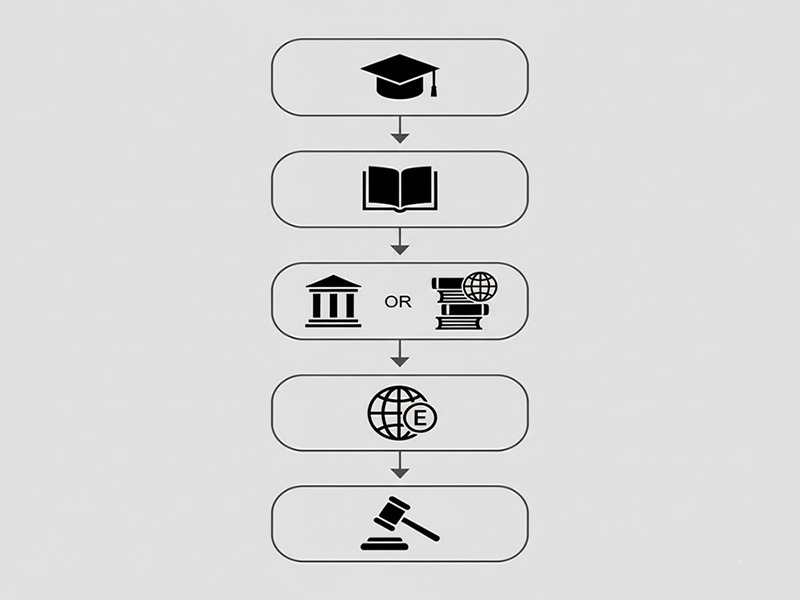
Before starting solicitor training, you need to meet certain academic and eligibility requirements.
Academic Requirements:
● Most students complete GCSEs and A-levels or equivalent qualifications.
● While specific subjects are not mandated, strong results in English, maths and critical thinking subjects are advantageous.
University Degree:
● A law degree (LLB) is a direct route to solicitor training.
● Non-law graduates must complete a conversion course, such as the Graduate Diploma in Law (GDL), before proceeding.
English Language Requirements for International Students:
● If English is not your first language, you may need IELTS or equivalent certification to meet SRA standards.
What Routes Can You Take to Become a Solicitor in the UK?

There are multiple routes to qualify as a solicitor, each catering to different backgrounds and career stages.
1. Solicitors Qualifying Examination (SQE) Route
Introduced in 2021, the SQE is the main route for new solicitors. It standardises the qualification process and consists of:
● SQE1: Tests legal knowledge through multiple-choice exams.
● SQE2: Assesses practical legal skills such as client interviewing, advocacy, legal research and drafting.
Qualifying Work Experience (QWE):
● Must complete two years of legal work experience, which can be completed at one or multiple organisations.
● QWE can include placements, paralegal roles, or pro bono work, providing flexibility compared to traditional training contracts.
2. LPC + Training Contract Route (Traditional)
Before the SQE, students typically completed a Legal Practice Course (LPC) followed by a two-year training contract at a law firm.
● Some students who started before SQE implementation may still follow this path.
● Training contracts are competitive, with firms often recruiting years in advance.
3. Solicitor Apprenticeship Route
For school leavers, a solicitor apprenticeship allows you to qualify without a university degree.
● Combines work and study over six years.
● Apprentices earn a salary while completing their qualification.
4. Paralegal / CILEX Route
Experienced paralegals or CILEX-qualified lawyers can convert their experience into a solicitor qualification, often using the SQE route.
● Provides a career progression pathway for those already in legal roles.
What Steps Are Involved in the SQE Route?

The SQE route is structured yet flexible, making it suitable for both graduates and career changers.
Step 1: Academic Qualification
● Obtain a degree (law or non-law with GDL conversion).
Step 2: SQE1 Exam
● Covers functioning legal knowledge across all areas of law.
● Consists of multiple-choice assessments and requires thorough preparation.
Step 3: SQE2 Exam
● Tests practical legal skills through simulations, such as client interviews and drafting legal documents.
● Focuses on the real-world application of knowledge.
Step 4: Qualifying Work Experience (QWE)
● Complete two years of supervised legal work.
● Can include pro bono projects, internships, or multiple short placements.
Step 5: Admission to the Roll of Solicitors
● Apply to the SRA with proof of SQE completion and QWE.
● SRA conducts a character and suitability assessment before granting admission.
How Much Does It Cost to Become a Solicitor?

SQE Route Costs:
● SQE1: ~£1,100
● SQE2: ~£2,500
● Preparation courses: £3,000–£6,000 (optional but recommended)
Degree / Conversion Costs:
● Law degree: £9,000–£27,000 per year depending on location and university.
● GDL conversion course: £7,000–£12,000
Apprenticeship:
● Earn a salary while studying, reducing upfront costs significantly.
Funding Options:
● Some law firms offer SQE sponsorship.
● Student loans may cover GDL or degree costs.
● Scholarships for outstanding candidates are occasionally available.
How Long Does It Take to Become a Solicitor?

SQE Route:
● Law graduates: 2–3 years (including exams + QWE)
● Non-law graduates: 3–4 years (including GDL + exams + QWE)
Apprenticeship:
● Typically 6 years from school to qualification, combining work and study.
LPC Route:
● LPC + training contract: 3–4 years post-university, depending on availability of training contracts.
What Challenges Do Aspiring Solicitors Face?

● Competition: Securing QWE or training contracts is highly competitive.
● Workload: Balancing study, preparation for exams and practical experience can be demanding.
● Financial Pressure: Costs of courses, exams and living expenses can be significant without sponsorship.
Tips to Overcome Challenges:
● Start networking early through law societies, LinkedIn, or internships.
● Gain voluntary or pro bono experience to build skills.
● Research funding and sponsorship opportunities.
Can International Students or Lawyers Become Solicitors in the UK?

The UK legal profession is open to international candidates, but there are some specific requirements. If you are a foreign student or a lawyer from another country, you need to understand visa requirements, qualification recognition and work experience pathways.
International students need a student visa to study in the UK. If they plan to complete Qualifying Work Experience (QWE) in a law firm, they often require a Skilled Worker visa. Some law firms provide sponsorship for international candidates, but opportunities are competitive, especially at larger firms.
Foreign law degrees are often accepted under the SQE route, allowing international lawyers to qualify without needing a UK LLB. Certain overseas qualifications may exempt candidates from some parts of the SQE, but this depends on individual assessment by the Solicitors Regulation Authority (SRA). Foreign-trained lawyers can transition into the UK legal market by passing SQE assessments and completing QWE. Networking, internships and professional connections are crucial to establish a foothold in the UK legal profession.
What Skills Do Successful Solicitors Need?

Becoming a solicitor is not just about exams and degrees. Employers look for a combination of technical, interpersonal and professional skills.
Technical Legal Skills:
● Legal research and analysis to interpret case law and statutes.
● Drafting precise legal documents like contracts, agreements and court filings.
● Negotiation and advocacy skills for dispute resolution and settlements.
Soft Skills:
● Strong communication to explain complex legal matters to clients in simple terms.
● Time management to handle multiple cases, deadlines and work pressures.
● Problem-solving to develop practical and effective solutions for clients.
Professional Ethics:
● Adherence to the SRA Code of Conduct.
● Maintaining client confidentiality and integrity.
● Demonstrating honesty and professionalism in all interactions.
What Are the Career Prospects for Solicitors?

The career trajectory of a solicitor in the UK varies depending on the type of firm, specialism and geographic location.
Starting Salaries:
● High Street Firms: £25,000–£35,000 per year.
● Regional Commercial Firms: £30,000–£45,000 per year.
● London Magic Circle Firms: £45,000–£55,000 for trainees; £70,000+ for newly qualified solicitors.
Career Progression:
● Associate: Typically 2–6 years post-qualification.
● Senior Associate: After demonstrating expertise and client management skills.
● Partner: Requires leadership, business development and consistently high legal performance.
Specialisations and Opportunities:
● Corporate, commercial, banking and IP law usually offer the highest salaries.
● Family, criminal and immigration law may offer lower starting salaries but high demand and client satisfaction.
● Solicitors can also move in-house to corporate legal departments, providing different career experiences and work-life balance.
What Challenges Do Aspiring Solicitors Face?
Becoming a solicitor is highly competitive and candidates often face multiple challenges.
Competition for Work Experience:
● Large firms receive thousands of applications annually for training contracts and internships.
● Mid-tier and regional firms offer fewer opportunities, requiring careful planning and early application.
Exam Pressure:
● SQE1 and SQE2 are demanding and require extensive preparation.
● SQE1 tests legal knowledge through multiple-choice questions.
● SQE2 assesses practical skills like client interviewing, advocacy and drafting.
Work-Life Balance:
● Trainees and junior solicitors often work long hours, especially in commercial firms.
● Effective time management and stress management strategies are crucial to maintain performance and avoid burnout.
How Can You Improve Your Chances of Qualifying as a Solicitor?

Aspiring solicitors can improve their prospects by focusing on experience, networking and preparation.
Networking and Mentorship:
● Join law societies at school or university.
● Attend career fairs, webinars and workshops hosted by law firms.
● Seek mentorship from practising solicitors to gain guidance and advice.
Building Experience:
● Take part in pro bono work or legal clinics to gain practical exposure.
● Intern or work part-time at law firms or corporate legal departments.
● Keep detailed records of all work for QWE verification under the SQE route.
Preparing for Exams:
● Enrol in SQE preparation courses or online modules.
● Use practice papers and mock exams to develop exam strategies.
● Focus on areas of weakness and seek support from tutors or peer groups.
How Do You Gain Qualifying Work Experience (QWE)?

QWE is a critical component of the SQE route and allows candidates to develop practical skills under supervision.
Requirements for QWE:
● Minimum of 2 years of supervised legal work.
● Can be completed at one or multiple organisations.
● Experience must be signed off by a qualified solicitor.
Types of QWE Opportunities:
● Training contracts at law firms (traditional route).
● Internships, placements, or temporary paralegal roles.
● Pro bono work at legal clinics or charities.
Tips to Maximise QWE:
● Document all tasks and responsibilities clearly.
● Seek varied experiences to cover different areas of law.
● Request regular feedback and maintain good relationships with supervisors.
How Do You Apply to the SRA and Get Admitted?

After completing the SQE exams and QWE, candidates apply to the Solicitors Regulation Authority (SRA) for admission.
Application Requirements:
● Proof of completion of SQE1 and SQE2.
● Evidence of 2 years QWE, signed by supervising solicitors.
● Character and suitability declaration, including criminal history and financial status.
Timeline:
● SRA typically takes several weeks to review applications.
● Once approved, the candidate is formally admitted to the Roll of Solicitors and can practise as a qualified solicitor.
What Are the Expected Salaries for Solicitors in the UK?

Salary varies depending on experience, firm size and specialisation.
Trainee Solicitors:
● High Street Firms: £25,000–£35,000
● London Firms: £40,000–£55,000
Newly Qualified Solicitors:
● Regional Firms: £35,000–£50,000
● Magic Circle / Top Commercial Firms: £70,000–£90,000
Experienced Solicitors / Partners:
● Senior associates: £60,000–£120,000
● Partners: £100,000–£1,000,000+ depending on firm and client portfolio
Other Career Paths:
● In-house legal departments, government agencies, or consultancy roles may offer alternative pay scales and work-life balance.
What Challenges Might You Face in an Early Career?

● Securing Training Contracts: High competition means early preparation is key.
● Exams and Practical Skills: SQE2 requires strong advocacy and drafting skills; failure may require retakes.
● Balancing Work and Study: Many candidates combine QWE with exam preparation, which requires disciplined time management.
Tips to Overcome Challenges:
● Start gaining work experience early through internships or volunteering.
● Use peer study groups and exam prep resources for SQE success.
● Seek mentorship to guide career decisions and reduce trial-and-error mistakes.
How Can You Improve Your Chances of Becoming a Solicitor?

Aspiring solicitors need to build experience, skills, and professional networks strategically. The following steps can significantly increase the likelihood of qualification success.
1. Gain Relevant Work Experience Early
● Apply for internships, summer placements, or part-time paralegal roles.
● Participate in pro bono work through law clinics or charities.
● Focus on tasks that demonstrate practical legal skills: drafting, client interviewing and legal research.
2. Networking and Professional Mentorship
● Join student law societies, local legal forums and online communities.
● Attend legal workshops, webinars and career fairs to meet practising solicitors.
● Seek mentors to provide guidance, advice and potential references for QWE.
3. Focused Preparation for Exams
● For SQE1, practise multiple-choice questions and revise functioning legal knowledge areas.
● For SQE2, practise client interviews, advocacy and legal drafting through mock exercises.
● Use preparatory courses, textbooks and online resources to ensure structured revision.
4. Develop Soft Skills
● Communication, problem-solving and time management are crucial in real-world legal practice.
● Learn negotiation and conflict resolution techniques.
● Maintain professional ethics and integrity in every task.
How Do You Gain Qualifying Work Experience (QWE) Effectively?
QWE is mandatory under the SQE route and provides the practical foundation for becoming a solicitor.
Where You Can Gain QWE:
● Training contracts at law firms.
● Legal internships at corporate legal departments.
● Paralegal positions with supervised responsibility.
● Pro bono clinics and volunteering opportunities.
Tips to Make the Most of QWE:
● Seek diverse experiences to cover multiple practice areas.
● Document all responsibilities and skills acquired; keep records signed by supervising solicitors.
● Ask for feedback regularly to improve practical skills.
● Take initiative in tasks such as drafting contracts, conducting legal research, or supporting client meetings.
How Do You Apply to the SRA to Be Admitted as a Solicitor?

Once you have completed SQE1, SQE2 and QWE, the next step is formal admission.
Steps to Apply:
- Complete the SRA’s online application.
- Submit proof of SQE1 and SQE2 completion.
- Provide evidence of at least 2 years of QWE, signed by qualified solicitors.
- Submit a character and suitability declaration (criminal record, financial history).
- Pay the application fee.
Timeline:
● Review and approval usually take several weeks.
● Once approved, you are officially added to the Roll of Solicitors and can practise independently.
What Are the Next Steps You Should Take?
For aspirants at different stages, a clear roadmap ensures steady progress.
If You Are in School:
● Focus on achieving strong GCSEs and A-levels (especially in English and critical thinking subjects).
● Participate in law societies, competitions, or volunteering opportunities.
● Research law degrees and apprenticeships early.
If You Are a University Student:
● Choose a law degree or consider GDL if you have a non-law degree.
● Apply for summer internships, vacation schemes and pro bono work.
● Start networking with law firms and legal professionals.
If You Are a Graduate or Career Changer:
● Complete SQE preparation courses.
● Gain QWE through paralegal roles or voluntary legal placements.
● Network aggressively and consider mentorship to guide career steps.
Checklist to Become a Solicitor
Academic Requirements:
● GCSEs and A-levels (or equivalent)
● Law degree or GDL conversion (for non-law graduates)
Professional Exams:
● Pass SQE1
● Pass SQE2
Work Experience:
● Complete at least 2 years of QWE
● Maintain signed documentation of work experience
Regulatory Approval:
● Submit SRA application
● Complete character and suitability declaration
● Pay application fee and receive admission
Career Development:
● Consider specialisation areas
● Apply for trainee or associate positions
● Continue professional networking and skill development
Tips for Long-Term Career Success
● Choose a legal specialism that aligns with your interests and strengths.
● Seek mentorship throughout your career to guide growth and decisions.
● Maintain ethical standards and professionalism consistently.
● Continue CPD (Continuing Professional Development) after qualification to stay competitive.
● Consider work-life balance when choosing between private practice, in-house roles, or public sector work.
Frequently Asked Questions About Becoming a Solicitor
1. Do you need a university degree?
● A law degree is the easiest path, but non-law graduates can complete a GDL conversion or apprenticeship.
2. How hard are the SQE exams?
● SQE1 is multiple-choice, testing legal knowledge; SQE2 tests practical skills. Adequate preparation is essential.
3. Can mature students or career changers qualify?
● Yes, the SQE and apprenticeship routes are flexible for graduates and mature candidates.
4. Can foreign lawyers bypass parts of the SQE?
● Certain overseas qualifications may exempt candidates from some SQE assessments. The SRA provides individual assessments.
5. When do solicitors specialise in an area of law?
● Specialisation usually occurs post-qualification, though internships and QWE can provide early exposure.
Conclusion
Becoming a solicitor in the UK is a structured, multi-step process that combines education, examinations, work experience and regulatory approval. The SQE route has simplified access, providing flexibility for law graduates, non-law graduates, apprentices and international candidates. Success requires not only passing exams but also developing practical legal skills, networking and gaining relevant experience.
By following the roadmap laid out in this guide from academic preparation to gaining QWE, passing SQE assessments and applying to the SRA, aspiring solicitors can confidently navigate the path to qualification. Planning, persistence and a focus on skills and professionalism are the keys to a successful legal career.
With the checklist, actionable steps and guidance provided, you now have a complete roadmap to becoming a solicitor in the UK. Start early, stay consistent and focus on developing both legal knowledge and practical skills. A career in law awaits.